

Best DPI for Gaming: 7 Powerful Settings
What DPI Is Best for Gaming ? Best DPI for gaming depends on game type, sensitivity, and precision needs. Low DPI improves accuracy for aiming, while high DPI increases speed for fast movement, and optimal performance results from balancing DPI with in-game sensitivity. DPI affects gaming accuracy. For a full overview, read our computer mouse guide.
Best DPI for Gaming Depends on Game Type, Sensitivity, and Precision Needs
Best DPI for gaming depends on game type, sensitivity, and precision needs. Different games require different cursor behavior for optimal control.
Low DPI creates precise movement. High DPI increases speed across large screens.
What Is DPI in Gaming Mouse and How It Works?
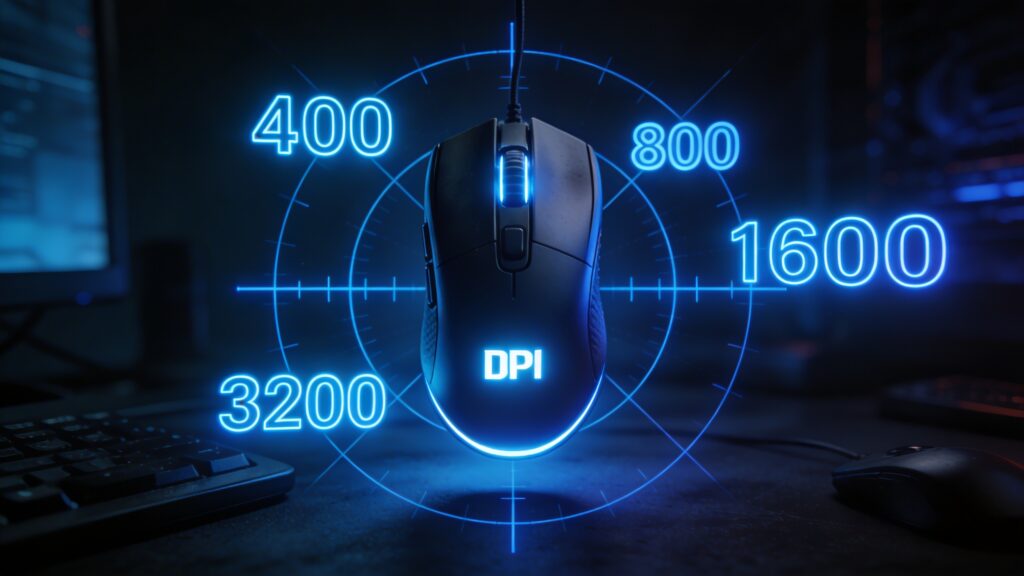
DPI in gaming mouse defines how sensitive the cursor movement is based on physical mouse motion.DPI relates to mouse performance. Learn more in our mouse input device guide.
DPI Measures Cursor Movement Sensitivity
DPI measures cursor movement sensitivity. Higher DPI moves the cursor farther with less physical movement.
Increased sensitivity creates faster motion. Lower sensitivity improves control.
Sensor Resolution Defines Movement Speed and Accuracy
Sensor resolution defines movement speed and accuracy. Higher resolution detects smaller movements.
Precise detection improves accuracy. Cursor movement becomes smoother.
How DPI Affects Gaming Performance?
DPI affects gaming performance by controlling speed, accuracy, and responsiveness during gameplay.
High DPI Increases Cursor Speed Across the Screen
High DPI increases cursor speed across the screen. Small hand movements create large cursor movement.
Faster motion improves reaction speed. Rapid gameplay becomes easier.
Low DPI Improves Precision and Target Control
Low DPI improves precision and target control. Larger hand movement allows finer adjustments.
Higher control improves aiming. Accuracy increases in shooting games.
Sensitivity Settings Modify DPI Output
Sensitivity settings modify DPI output. Software adjustments scale cursor movement.
Combined settings improve control. Users fine-tune performance.
DPI vs Sensitivity – Key Differences Explained
DPI vs sensitivity differences explain how hardware and software settings interact.Sensitivity settings matter. Read our mouse DPI guide.
DPI Defines Hardware-Level Movement
DPI defines hardware-level movement. Mouse sensor determines how far the cursor moves.
Hardware control sets base sensitivity. Performance depends on sensor quality.
Sensitivity Adjusts Software-Level Response
Sensitivity adjusts software-level response. Game settings modify how input behaves.
Software scaling changes movement speed. Users customize gameplay feel.
Best DPI Settings for Different Game Types
Best DPI settings for different game types depend on gameplay speed, precision needs, and control style. Each game category requires a different balance between speed and accuracy.
FPS Games Require Low DPI for Precision Aiming
FPS games require low DPI for precision aiming. Lower sensitivity allows controlled and accurate crosshair movement.
Tactical Shooters Prioritize Accuracy and Stability
Tactical shooters prioritize accuracy and stability. Slow and precise movements improve targeting.
Stable control increases hit accuracy. Players perform better in competitive matches.
Sniper Gameplay Requires Fine Movement Control
Sniper gameplay requires fine movement control. Small adjustments determine success.
Low DPI improves micro-adjustments. Precision aiming becomes easier.
MOBA and RTS Games Require Medium DPI for Balanced Control
MOBA and RTS games require medium DPI for balanced control. Players need both speed and accuracy.
Fast Navigation Requires Moderate Speed
Fast navigation requires moderate speed. Medium DPI allows quick map movement while maintaining control.
Balanced sensitivity improves gameplay. Players manage multiple actions efficiently.
Battle Royale and Fast-Paced Games Use Mixed DPI Settings
Battle royale and fast-paced games use mixed DPI settings. Players switch between speed and precision.
Dynamic Movement Requires Flexible Sensitivity
Dynamic movement requires flexible sensitivity. Situations change rapidly during gameplay.
Adaptive settings improve performance. Players react quickly and accurately.
Best DPI for Competitive Gaming
Best DPI for competitive gaming focuses on consistency, precision, and muscle memory.Different games require different hardware. See our gaming mouse guide.
Pro Players Use Low DPI for High Accuracy
Pro players use low DPI for high accuracy. Lower sensitivity improves aiming precision.
Accurate control increases performance. Competitive players rely on stability.
Consistent Settings Improve Muscle Memory
Consistent settings improve muscle memory. Repeated movements train the brain and hand coordination.
Consistency enhances performance. Players develop better control over time.
High DPI vs Low DPI – Performance Comparison
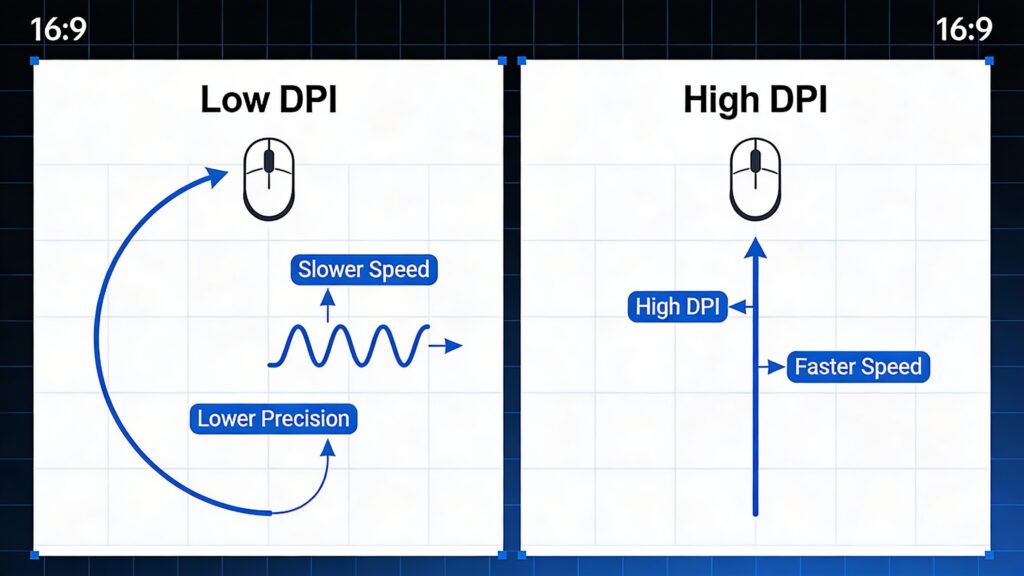
High DPI vs low DPI performance comparison highlights differences in speed, control, and accuracy.
High DPI Enables Faster Movement
High DPI enables faster movement. Small hand motion creates large cursor movement.
Fast speed improves reaction time. Ideal for fast-paced gameplay.
Low DPI Enhances Precision and Stability
Low DPI enhances precision and stability. Larger movement allows better control.
Stable aiming improves accuracy. Ideal for FPS and tactical games.
High DPI vs Low DPI – Comparison Table
High DPI vs low DPI comparison table shows the core differences in performance and use case.
| Feature | High DPI | Low DPI |
|---|---|---|
| Speed | Very Fast | Slow |
| Precision | Lower | Very High |
| Control | Less Stable | More Stable |
| Best For | Fast movement games | FPS / tactical shooters |
| Accuracy | Medium | High |
Recommended DPI Ranges for Gaming
Recommended DPI ranges for gaming depend on playstyle, game type, and control preference. Choosing the right range improves both accuracy and speed.
400–800 DPI Creates High Precision for FPS
400–800 DPI creates high precision for FPS games. Low sensitivity allows fine aiming adjustments.
Precise control improves accuracy. Ideal for tactical shooters and sniping.
800–1600 DPI Balances Speed and Control
800–1600 DPI balances speed and control. Medium sensitivity supports both movement and accuracy.
Balanced settings improve versatility. Suitable for most game types.
1600+ DPI Supports Fast Navigation
1600+ DPI supports fast navigation. High sensitivity enables rapid cursor movement.
Faster speed improves reaction time. Best for fast-paced gameplay and large screens.
DPI and Mouse Sensor Quality
DPI and mouse sensor quality define how accurately movement is tracked across different sensitivity levels.
High-Quality Sensors Maintain Accuracy at All DPI Levels
High-quality sensors maintain accuracy at all DPI levels. Advanced tracking reduces jitter and errors.
Stable performance improves control. Precision remains consistent.
Cheap Sensors Reduce Tracking Consistency
Cheap sensors reduce tracking consistency. Low-quality components create inaccuracies.
Unstable tracking affects performance. Cursor movement becomes unreliable.
DPI and Mouse Pad Impact on Performance
DPI and mouse pad impact on performance define how surface interaction affects tracking accuracy.Surface affects tracking. Check our mouse pad guide.
Surface Texture Influences Sensor Tracking
Surface texture influences sensor tracking. Rough or smooth surfaces change how sensors detect movement.
Proper surface improves tracking. Accuracy increases significantly.
Consistent Surface Improves Accuracy
Consistent surface improves accuracy. Even texture ensures stable cursor movement.
Stable tracking enhances performance. Users gain better control.
DPI Adjustment and Optimization
DPI adjustment and optimization improve gaming performance by aligning hardware and software settings.
Software Settings Enable DPI Customization
Software settings enable DPI customization. Gaming software allows users to change sensitivity levels.
Custom settings improve control. Users tailor performance to their needs.
In-Game Settings Align DPI with Gameplay
In-game settings align DPI with gameplay. Sensitivity sliders adjust how input behaves.
Combined tuning improves accuracy. Players optimize movement.
Common Mistakes When Choosing DPI
Common mistakes when choosing DPI reduce performance and create inconsistent gameplay.
High DPI Overuse Reduces Accuracy
High DPI overuse reduces accuracy. Excessive sensitivity makes control difficult.
Unstable movement lowers precision. Aiming becomes harder.
Inconsistent Settings Break Muscle Memory
Inconsistent settings break muscle memory. Frequent changes disrupt coordination.
Lack of consistency reduces performance. Players lose control.
What DPI Is Best for Gaming – Which Is Better?
Best DPI for gaming depends on accuracy, speed, and consistency. The optimal choice varies by game type and user preference.
Low DPI Delivers Best Results for Precision Games
Low DPI delivers best results for precision games. Slower movement allows accurate targeting.
High control improves performance. Ideal for FPS and tactical gameplay.
Medium DPI Provides Balanced Performance
Medium DPI provides balanced performance. It combines speed with control.
Versatile settings support multiple games. Users achieve consistent results.
Who Should Use Low vs High DPI
Who should use low vs high DPI depends on skill level, game type, and playstyle preference. Different users benefit from different sensitivity levels.
Competitive Gamers Prefer Low DPI
Competitive gamers prefer low DPI. Lower sensitivity provides better control and precision.
Accurate aiming improves performance. Professional players rely on stability.
Casual Players Use Medium to High DPI
Casual players use medium to high DPI. Higher sensitivity allows faster movement with less effort.
Easy control improves comfort. Everyday gaming becomes more enjoyable.
FAQs About DPI for Gaming
What DPI do pro gamers use
Pro gamers typically use 400–800 DPI. Low DPI improves accuracy and consistent aiming.Want better control? Read mouse DPI guide.
Is higher DPI better for gaming
Higher DPI is not always better for gaming. It increases speed but reduces control.
Balanced settings provide better results. Precision matters more than speed.
What DPI is best for FPS games
Best DPI for FPS games is 400–800 DPI. Lower sensitivity allows precise aiming.
Controlled movement improves accuracy. Players perform better.
Does DPI affect aim
DPI affects aim directly. Higher DPI makes aiming faster, while lower DPI improves precision.
Balanced DPI enhances control. Players adjust based on preference.
Can DPI improve performance
DPI can improve performance when optimized correctly. Proper settings enhance both speed and accuracy.
Consistent configuration boosts gameplay. Players achieve better results.
Best DPI for Gaming Depends on Precision, Control, and Game Style
Best DPI for gaming depends on precision, control, and game style. Low DPI provides accuracy for competitive games, while medium DPI balances speed and control for general use. Choosing the right DPI ensures better aiming, smoother movement, and improved overall gaming performance
see about computer mouse

Thanks for breaking down how DPI affects gaming performance—especially the part about balancing accuracy and speed depending on the game type. I’ve found that adjusting my in-game sensitivity alongside DPI makes a huge difference in both precision and response time. This article really helped clarify how sensor resolution ties into overall mouse performance.
thanks for your comment