

Mouse vs Touchpad: 8 Key Differences in Precision, Speed, and Control
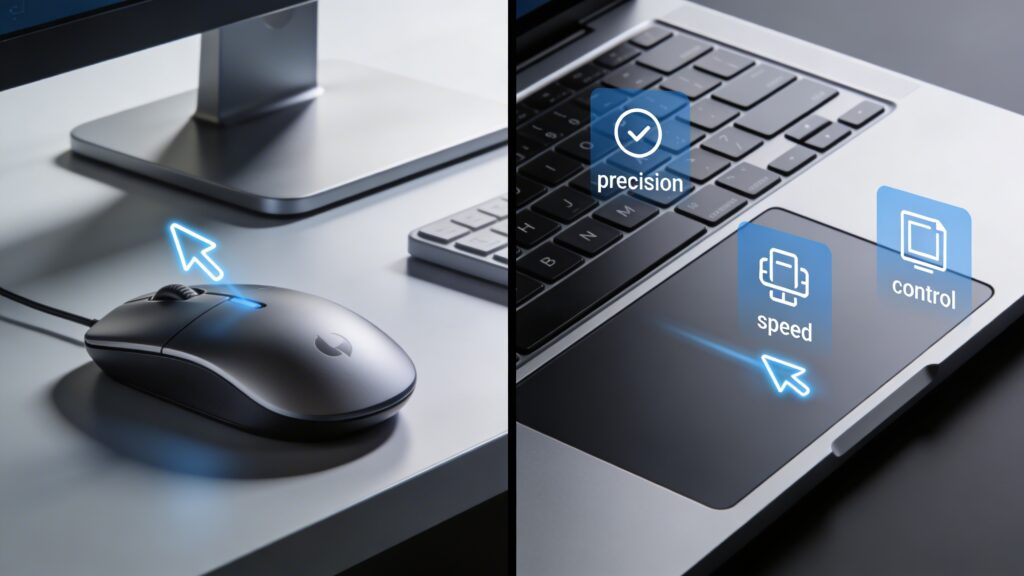
A mouse vs touchpad defines precision, speed, and user control by comparing sensor-based input with surface-based finger interaction. A mouse delivers higher accuracy and faster response, while a touchpad provides portability and gesture-based navigation.computer mouse guide.
A computer mouse is a pointing device used to interact with a computer system.
Mouse vs Touchpad Defines Precision, Speed, and User Control
Mouse vs touchpad defines precision, speed, and user control. Input method determines how accurately and quickly users interact with a computer.
A dedicated device creates precise movement. A touch surface enables flexible interaction.
What Is a Mouse and How It Works?
A mouse works by converting physical movement into digital cursor motion. Internal sensors track surface movement and send signals to the computer. Learn more in our mouse input device guide.
Mouse Converts Physical Movement Into Precise Cursor Control
Mouse converts physical movement into precise cursor control. Hand movement directly translates into on-screen motion.
Direct mapping increases accuracy. Users achieve fine control.
Sensor Tracking Creates High Accuracy and Responsiveness
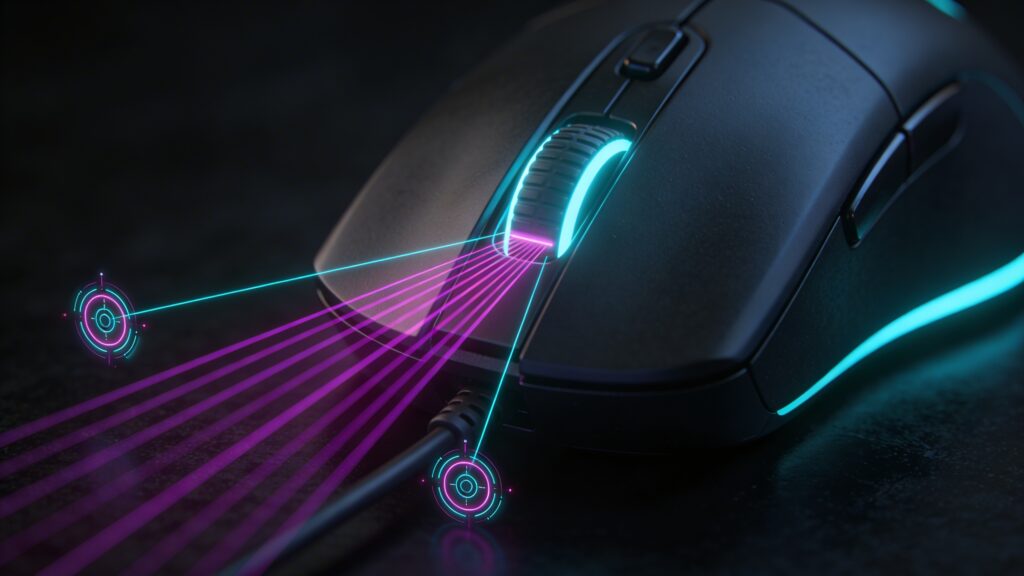
Sensor tracking creates high accuracy and responsiveness. Optical or laser sensors detect surface details.
Accurate tracking improves precision. Cursor movement remains smooth.
What Is a Touch-pad and How It Works?
A touchpad works by detecting finger movement on a flat surface. The system translates gestures into cursor actions.See our types of computer mouse.
Touchpad Detects Finger Movement Through Capacitive Surface
Touchpad detects finger movement through capacitive surface. Electrical signals respond to skin contact.
Surface detection creates input. Cursor follows finger movement.
Gesture Input Enables Multi-Touch Navigation
Gesture input enables multi-touch navigation. Multiple fingers trigger commands like scroll and zoom.
Gesture control improves efficiency. Users navigate quickly.
Mouse vs Touchpad – Key Differences Overvie
Mouse vs touchpad key differences overview highlights how each device changes interaction style.
Input Method Defines Interaction Sty
Input method defines interaction style. A mouse uses physical movement, while a touchpad uses finger gestures.
Physical control improves precision. Gesture control increases flexibility.
Physical vs Surface-Based Control Creates Different User Experience
Physical vs surface-based control creates different user experience. A mouse offers tactile feedback, while a touchpad relies on touch sensitivity.
Tactile input increases control. Surface input improves portability.
Mouse vs Touchpad – Performance Comparison
Mouse vs touchpad performance comparison shows differences in accuracy, speed, and efficiency.
Precision Accuracy Results From Dedicated Sensor Tracking
Precision accuracy results from dedicated sensor tracking. Mouse sensors detect movement with high detail.
High precision improves tasks. Design and gaming benefit most.
Speed and Responsiveness Result From Input Method Design
Speed and responsiveness result from input method design. A mouse provides faster cursor movement across large screens.
Fast response improves workflow. Users complete tasks quickly.
Multi-Tasking Efficiency Results From Control Flexibility
Multi-tasking efficiency results from control flexibility. A mouse allows faster switching and dragging.
Flexible control improves productivity. Users handle complex tasks efficiently.
Mouse vs Touchpad – Latency and Response Time
Mouse vs touchpad latency and response time determine how quickly input appears on screen.
Mouse Input Reduces Delay Through Direct Signal Processing
Mouse input reduces delay through direct signal processing. Signals travel instantly to the system.
Low latency improves responsiveness. Actions feel immediate.
Touchpad Input Introduces Processing Overhead From Gesture Recognition
Touchpad input introduces processing overhead from gesture recognition. The system interprets finger gestures before execution.
Extra processing increases delay. Response may feel slower.
Mouse vs Touchpad Comparison Table
| Feature | Mouse | Touchpad |
|---|---|---|
| Precision | Very high | Medium |
| Speed | Fast | Moderate |
| Latency | Very low | Slightly higher |
| Portability | External device | Built-in |
| Gaming | Best choice | Not ideal |
| Gestures | Limited | Advanced multi-touch |
Mouse vs Touchpad Remains a Choice of Performance vs Convenience
Mouse vs touchpad remains a choice of performance vs convenience. A mouse delivers precision and speed, while a touchpad provides portability and ease of use. Selecting the right input device depends on user needs, workflow, and environment.Sensitivity impacts performance. Read our mouse DPI guide.
Mouse vs Touchpad – Comfort and Ergonomics
Mouse vs touchpad comfort and ergonomics define long-term usability and physical strain. Device design determines hand position and muscle pressure.
Mouse Design Supports Natural Hand Position
Mouse design supports natural hand position. The shape aligns with palm and finger structure.
Ergonomic design reduces wrist strain. Users maintain comfort during long sessions.
Touchpad Usage Creates Finger-Based Strain Over Time
Touchpad usage creates finger-based strain over time. Continuous finger movement concentrates pressure on small areas.
Repeated motion increases fatigue. Extended use reduces comfort.

Mouse vs Touchpad – Portability and Convenience
Mouse vs touchpad portability and convenience define ease of use and mobility. Device form determines setup flexibility.
Touchpad Integration Eliminates Need for External Device
Touchpad integration eliminates need for external device. Built-in design supports immediate usage.
Integrated system improves portability. Users operate laptops anywhere.
Mouse Adds External Hardware but Improves Flexibility
Mouse adds external hardware but improves flexibility. Separate device allows wider movement range.
Extended control enhances usability. Users achieve better precision.
Mouse vs Touchpad – Gaming Performance Comparison
Mouse vs touchpad gaming performance comparison defines accuracy, speed, and responsiveness in gameplay.
Mouse Precision Improves Competitive Gameplay
Mouse precision improves competitive gameplay. High-accuracy sensors detect fine movement.
Accurate tracking enhances aiming. Players gain competitive advantage.
Touchpad Limitations Reduce Gaming Accuracy
Touchpad limitations reduce gaming accuracy. Surface input lacks fine control.
Lower precision affects performance. Competitive gameplay becomes difficult.
Mouse vs Touchpad – Productivity and Office Work
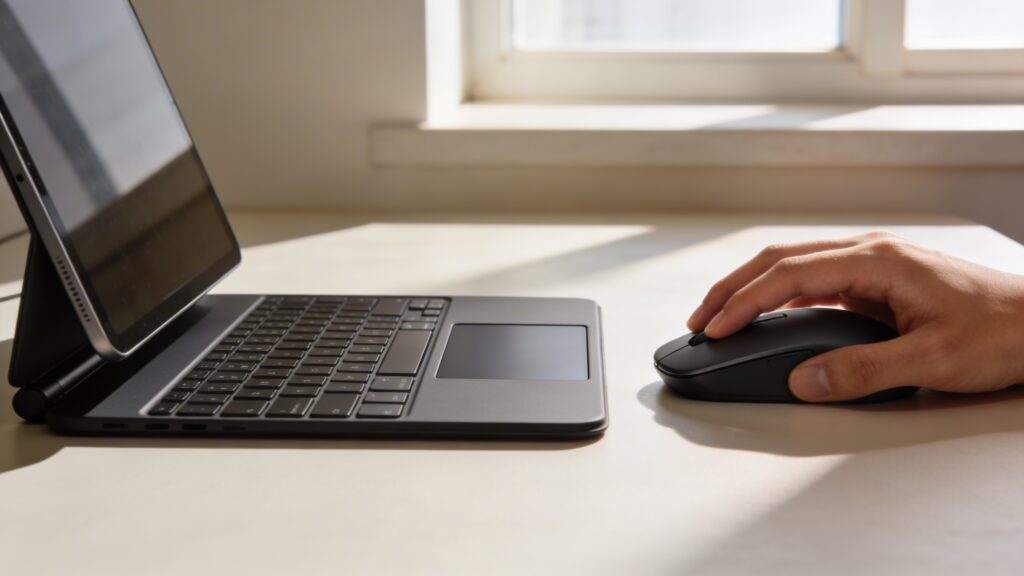
Mouse vs touchpad productivity and office work define efficiency in daily computing tasks.
Mouse Control Improves Workflow Efficiency
Mouse control improves workflow efficiency. Precise movement speeds up task execution.
Accurate input reduces errors. Users complete tasks faster.
Touchpad Gestures Enhance Basic Navigation Tasks
Touchpad gestures enhance basic navigation tasks. Multi-touch actions simplify scrolling and switching.
Gesture control improves convenience. Users perform simple tasks quickly.
Mouse vs Touchpad – Design and Creative Work
Mouse vs touchpad design and creative work define precision requirements for detailed tasks.
Mouse Enables Pixel-Level Precision for Editing
Mouse enables pixel-level precision for editing. Fine cursor control supports detailed adjustments.
High accuracy improves output quality. Designers achieve professional results.
Touchpad Limits Fine Control in Detailed Tasks
Touchpad limits fine control in detailed tasks. Finger-based input reduces precision.
Limited accuracy affects editing. Complex work becomes slower.
Mouse vs Touchpad – Battery and Power Usage
Mouse vs touchpad battery and power usage define how each device consumes energy and maintains operation.
Mouse Power Depends on Wired or Wireless Design
Mouse power depends on wired or wireless design. Wired mice draw power directly from the computer, while wireless mice rely on internal batteries.
Direct power creates continuous performance. Battery systems enable portability.
Touchpad Draws Power From Laptop System
Touchpad draws power from laptop system. Integrated hardware uses the laptop’s internal battery.
Built-in power creates seamless operation. Users avoid external charging.
Mouse vs Touchpad – Pros and Cons
Mouse vs touchpad pros and cons define strengths and limitations across performance and usability.
Mouse Advantages and Limitations
Mouse advantages and limitations highlight precision and control. Sensor-based tracking creates high accuracy, but external hardware reduces portability.
High precision improves performance. Extra device adds setup dependency
Touchpad Advantages and Limitations
Touchpad advantages and limitations highlight convenience and mobility. Built-in design improves portability, but surface input reduces control.
Integrated system increases ease of use. Limited precision affects advanced tasks.
Mouse vs Touchpad – Comparison Table (MANDATORY)
| Feature | Mouse | Touchpad |
|---|---|---|
| Precision | High (sensor-based) | Medium (finger-based) |
| Speed | Fast | Moderate |
| Latency | Low | Higher |
| Gaming | Excellent | Poor |
| Portability | External device | Built-in |
| Comfort | Better for long use | Can cause strain |
| Accuracy | Very high | Limited |
Mouse vs Touchpad – Which Is Better?
Mouse vs touchpad which is better depends on user needs, workflow, and environment. Each device serves a specific purpose.
Mouse Delivers Better Performance for Precision Tasks
Mouse delivers better performance for precision tasks. Dedicated sensors create accurate and responsive control.
High precision improves results. Gaming, design, and professional work benefit most.
Touchpad Provides Better Portability for Casual Use
Touchpad provides better portability for casual use. Built-in design removes the need for extra hardware.
Compact setup improves mobility. Everyday tasks become more convenient.
Who Should Choose Mouse vs Touchpad
Who should choose mouse vs touchpad depends on user needs, tasks, and usage environment. Different users benefit from different input devices.
Gamers and Professionals Require Mouse Precis
Gamers and professionals require mouse precision. Sensor-based tracking creates accurate and responsive control.
High precision improves performance. Competitive gaming and design work depend on accuracy.
Casual Users Prefer Touchpad Convenience
Casual users prefer touchpad convenience. Built-in design simplifies everyday tasks.
Integrated control improves portability. Basic navigation becomes easy and fast.
Common Problems in Mouse vs Touchpad Usage
Common problems in mouse vs touchpad usage affect performance, accuracy, and usability. Each device presents different challenges. Explore types of computer mouse.
Mouse Requires Surface for Proper Tracking
Mouse requires surface for proper tracking. Sensor performance depends on consistent surface quality.
Unstable surfaces reduce accuracy. Cursor movement becomes inconsistent.
Touchpad Sensitivity Causes Input Error
Touchpad sensitivity causes input errors. High sensitivity triggers unintended gestures.
Incorrect input reduces control. Users experience navigation issues.
FAQs About Mouse vs Touch-pad
Is a mouse better than a touchpad
A mouse is better than a touchpad for precision and speed. It provides accurate control for gaming, design, and professional tasks.
Why do gamers prefer a mouse
Gamers prefer a mouse because it delivers high precision and fast response. Accurate tracking improves aiming and reaction time.
Can a touchpad replace a mouse
A touchpad can replace a mouse for basic tasks. However, it lacks precision for advanced work and gaming.
Which is more accurate
A mouse is more accurate than a touchpad. Sensor-based tracking creates precise cursor control.
Is a touchpad good for work
A touchpad is good for basic work. It supports navigation and simple tasks but limits advanced productivity.
Mouse vs Touchpad Choice Depends on Performance and Usage Needs
Mouse vs touchpad choice depends on performance and usage needs. A mouse delivers precision and speed for demanding tasks, while a touchpad provides portability and convenience for everyday use. Selecting the right device ensures better efficiency, comfort, and overall user experience. Read our computer mouse guide.
see about computer mouse


It’s interesting how you highlighted the trade-off between precision and portability—I’ve noticed I rely on touchpad gestures more when multitasking, but a mouse feels essential for detailed work. Your breakdown really makes it clear why the choice of input device can change depending on the task at hand.
Thanks, I really appreciate that! You explained it perfectly—it’s all about context. Touchpad gestures are great for speed and multitasking, while a mouse gives that extra precision when detail really matters. Glad the breakdown resonated with your experience!