
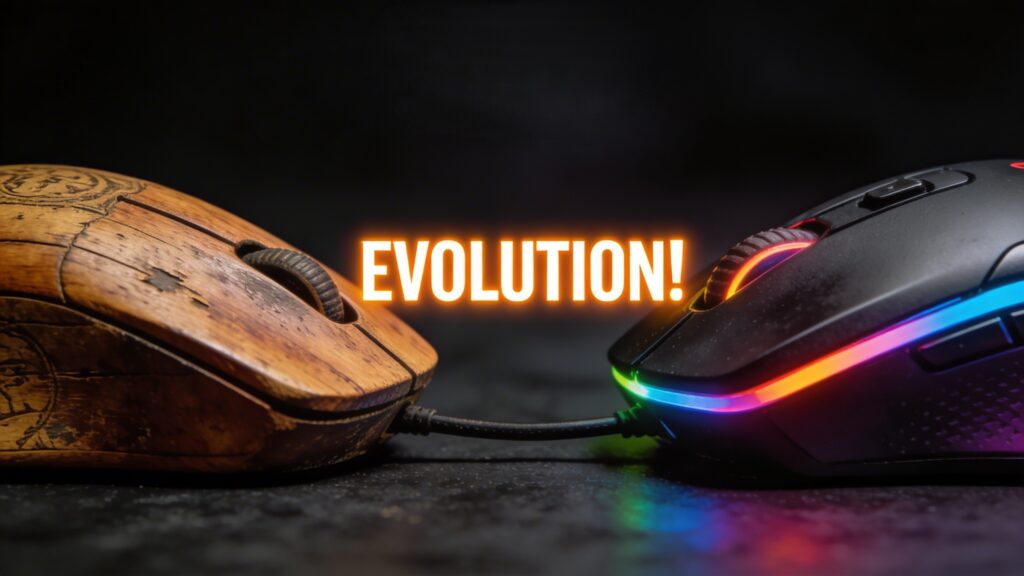

Computer Mouse History: 8 Key Milestones in the Evolution of Human-Computer Interaction
Computer mouse history defines the evolution of human-computer interaction by transforming complex command-based input into intuitive cursor control. The mouse enables direct interaction with graphical interfaces, making computers easier and faster to use.The computer mouse transformed human-computer interaction. For a complete overview, read our computer mouse guide.
A computer mouse is a pointing device used to interact with a computer system.
Computer Mouse History Defines the Evolution of Human-Computer Interaction
Computer mouse history defines the evolution of human-computer interaction. The device transforms how users control and navigate digital systems.
Direct input replaces command typing. Visual interaction improves usability.
What Is the Computer Mouse and Its Historical Significance?
A computer mouse is a pointing device used to control a cursor on a screen. Its historical significance lies in simplifying human interaction with computers.The mouse remains a core input device. Learn more in our mouse input device guide.
Mouse Introduction Creates a New Way to Control Computers
Mouse introduction creates a new way to control computers. Physical movement translates into digital cursor motion.
Direct interaction improves usability. Users navigate systems easily.
Pointing Device Innovation Enables Graphical Interaction
Pointing device innovation enables graphical interaction. The mouse allows users to interact with icons and menus.
Graphical control improves efficiency. Interfaces become user-friendly.
The Invention of the Computer Mouse
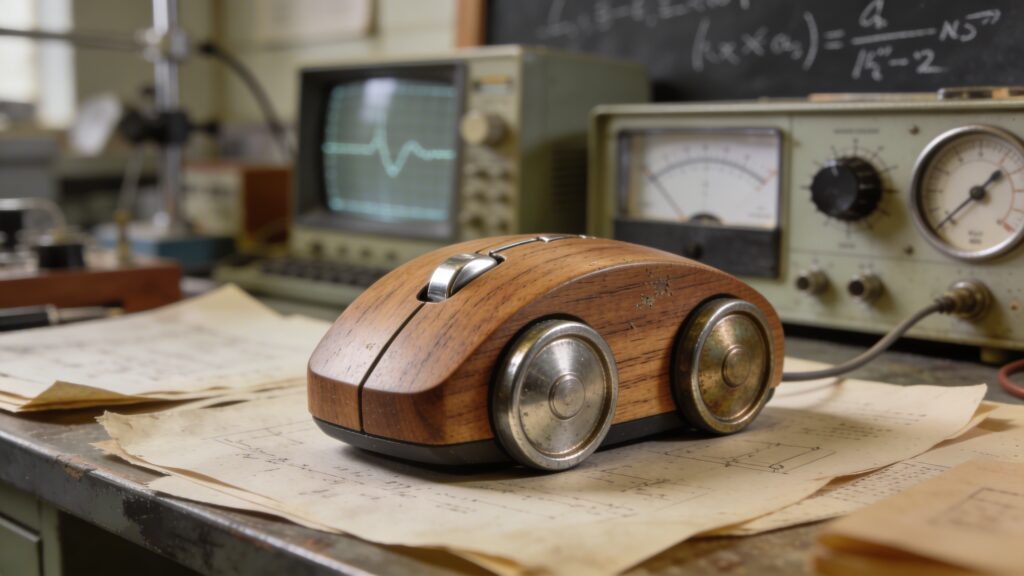
The invention of the computer mouse marks a major breakthrough in computing. Early designs focused on translating physical movement into digital signals.
Early Research Creates the First Mouse Prototype
Early research creates the first mouse prototype. Engineers develop a device to track hand movement.
Experimental design establishes concept. Cursor control becomes possible.
Mechanical Design Uses Rolling Ball for Movement Detection
Mechanical design uses rolling ball for movement detection. Internal rollers track movement across surfaces.
Ball-based tracking generates signals. Cursor moves according to motion.
Initial Concept Defines Cursor Control Mechanism
Initial concept defines cursor control mechanism. Movement data converts into on-screen direction and speed.
Signal processing creates interaction. Users gain precise control.
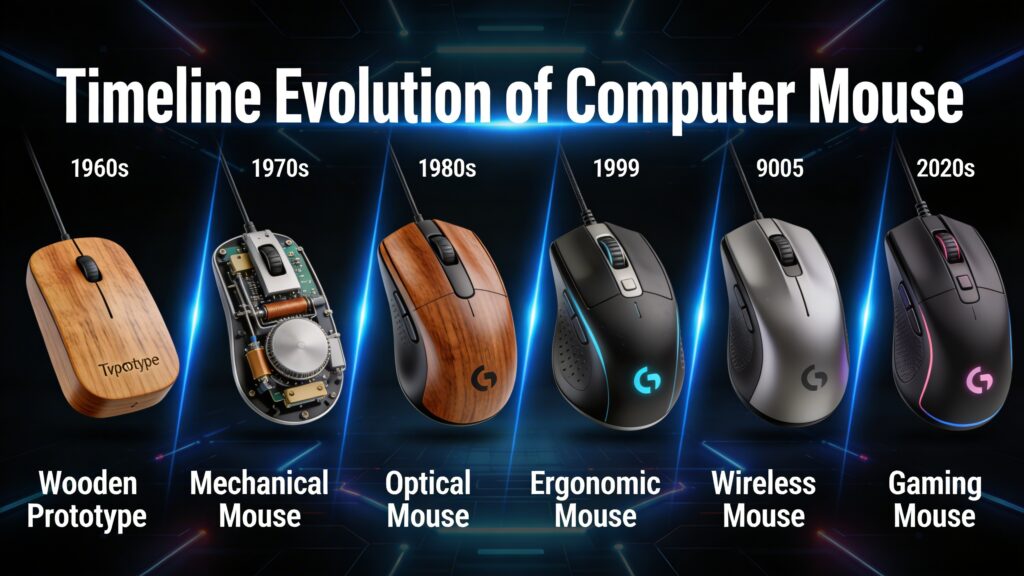
The First Computer Mouse Development Timeline
The first computer mouse development timeline shows how the technology evolved across decades.
1960s Research Establishs Mouse Technology
1960s research establishes mouse technology. Early experiments define the core concept of cursor control.
Initial innovation creates foundation. Future development becomes possible.
1970s Development Improves Design and Functionality
1970s development improves design and functionality. Engineers refine movement tracking and usability.
Improved design increases reliability. Devices become more practical.
1980s Adoption Expands with Personal Computers
1980s adoption expands with personal computers. Mouse usage grows with graphical user interfaces.
Mass adoption increases accessibility. Computers become user-friendly.
Early Computer Mouse Technology
Early computer mouse technology focuses on mechanical tracking systems and signal conversion.
Mechanical Mouse Uses Ball-Based Tracking System
Mechanical mouse uses ball-based tracking system. Rolling ball detects movement across surfaces.
Mechanical input generates signals. Cursor follows physical motion.
Internal Rollers Convert Movement Into Signals
Internal rollers convert movement into signals. Rotating components translate motion into digital data.
Signal conversion enables tracking. Computer interprets movement accurately.
Transition from Mechanical to Optical Mouse
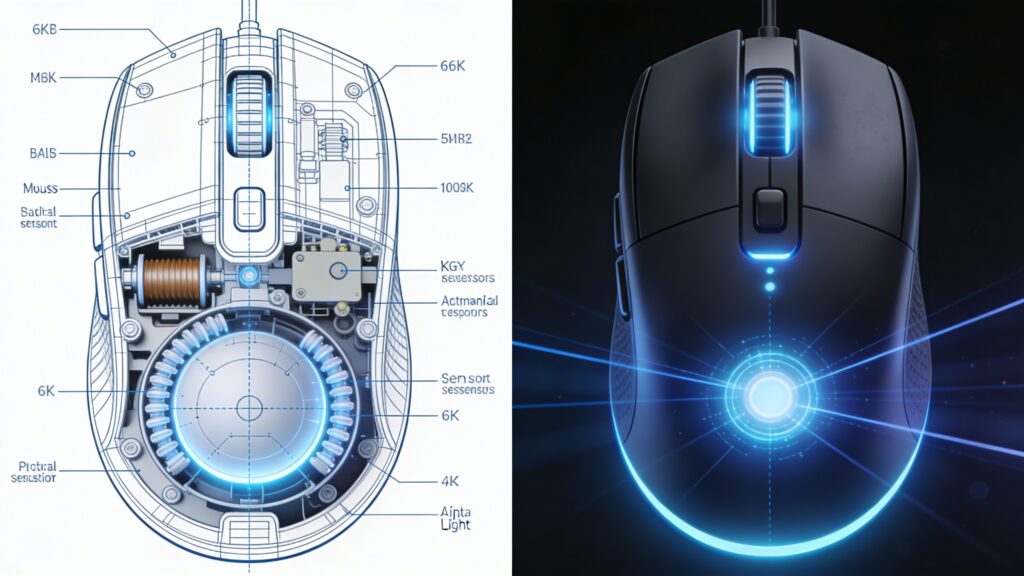
Transition from mechanical to optical mouse defines a major technological shift in tracking accuracy and performance. Sensor innovation replaces physical components with light-based detection.
Optical Sensor Replaces Ball Mechanism
Optical sensor replaces ball mechanism. Light-based sensors eliminate moving parts used in mechanical mice.
Solid-state design increases durability. Users experience more consistent tracking.
Light-Based Tracking Improves Accuracy
Light-based tracking improves accuracy. Optical sensors capture surface details using LED or laser light.
Precise detection enhances movement control. Cursor motion becomes smoother.
Evolution of Mouse Design and Features
Evolution of mouse design and features defines how usability, control, and comfort improve over time. Hardware upgrades expand functionality.
Button Expansion Adds More Control Functions
Button expansion adds more control functions. Additional buttons enable shortcuts and commands.
Extra inputs improve efficiency. Users perform tasks faster.
Scroll Wheel Introduction Improves Navigation
Scroll wheel introduction improves navigation. Rotating wheel enables vertical movement through content.
Continuous scrolling enhances usability. Users navigate pages quickly.
Ergonomic Design Enhances User Comfort
Ergonomic design enhances user comfort. Shape aligns with natural hand position.
Improved form reduces strain. Long-term usage becomes easier.
Wired vs Wireless Mouse Evolution
Wired vs wireless mouse evolution defines how connectivity changes device flexibility and performance. Technology advances improve both systems.
Wireless mice use Bluetooth or RF signals to communicate with devices.
Wired Mouse Establishes Stable Connectivity
Wired mouse establishes stable connectivity. Direct cable connection ensures consistent data transmission.
Stable signal improves reliability. Input remains uninterrupted.
Wireless Technology Introduces Flexibility and Mobility
Wireless technology introduces flexibility and mobility. Signal-based communication removes cable restrictions.
Cable-free design improves movement. Users gain portability.
Computer Mouse in Personal Computing Growth
Computer mouse in personal computing growth defines how the device becomes essential in everyday computing.
GUI Systems Increase Mouse Importance
GUI systems increase mouse importance. Graphical interfaces rely on pointer-based interaction.
Visual navigation improves usability. Users interact with icons and menus easily.
Software Development Expands Mouse Usage
Software development expands mouse usage. Applications integrate mouse-based controls.
Functional design increases dependency. Users perform complex tasks efficiently.
Major Milestones in Computer Mouse History
Major milestones in computer mouse history highlight key developments that shape modern input devices.
First Commercial Mouse Launch Defines Market Entry
First commercial mouse launch defines market entry. Early products introduce the device to consumers.
Commercial release increases adoption. Technology reaches wider users.
Optical Mouse Revolution Changes Tracking Technology
Optical mouse revolution changes tracking technology. Light-based sensors replace mechanical systems.
Advanced tracking improves accuracy. Devices become more reliable.
Gaming Mouse Development Enhances Performance
Gaming mouse development enhances performance. Specialized designs focus on speed and precision.
High-performance features improve control. Competitive gaming evolves.
Computer Mouse in Gaming and Professional Use
Computer mouse in gaming and professional use defines how performance demands drive innovation and precision. Specialized use cases push hardware development forward.
Modern wireless gaming mice reduce latency significantly.
Gaming Industry Drives Performance Innovation
Gaming industry drives performance innovation. Competitive gaming requires high speed, accuracy, and responsiveness.
Advanced sensors improve tracking. Players achieve precise control and faster reactions.
Professional Tools Require Precision Input Devices
Professional tools require precision input devices. Design, editing, and engineering software depend on accurate cursor movement.
High precision improves output quality. Users complete detailed tasks efficiently.
Modern Computer Mouse Technology
Modern computer mouse technology defines current advancements in speed, accuracy, and customization. Hardware evolution improves user experience.
High DPI Sensors Improve Sensitivity
High DPI sensors improve sensitivity. Increased dots per inch allow finer cursor movement.
Higher sensitivity enhances control. Users adjust movement based on needs.
Wireless Advancements Reduce Latency
Wireless advancements reduce latency. Improved signal transmission minimizes delay.
Low latency increases responsiveness. Wireless performance matches wired systems.
Customizable Buttons Expand Functionality
Customizable buttons expand functionality. Extra inputs allow programmable actions.
Custom controls improve efficiency. Users automate repetitive tasks.
Computer Mouse vs Other Input Devices Evolution
Computer mouse vs other input devices evolution defines competition between different interaction methods.
Mouse Competes with Touchpads and Touchscreens
Mouse competes with touchpads and touchscreens. Alternative input methods offer portability and direct interaction.
Different devices serve different needs. Users choose based on convenience.
Precision Advantage Maintains Mouse Relevance
Precision advantage maintains mouse relevance. Sensor-based tracking delivers superior accuracy.
High accuracy sustains demand. Mouse remains essential for advanced tasks.
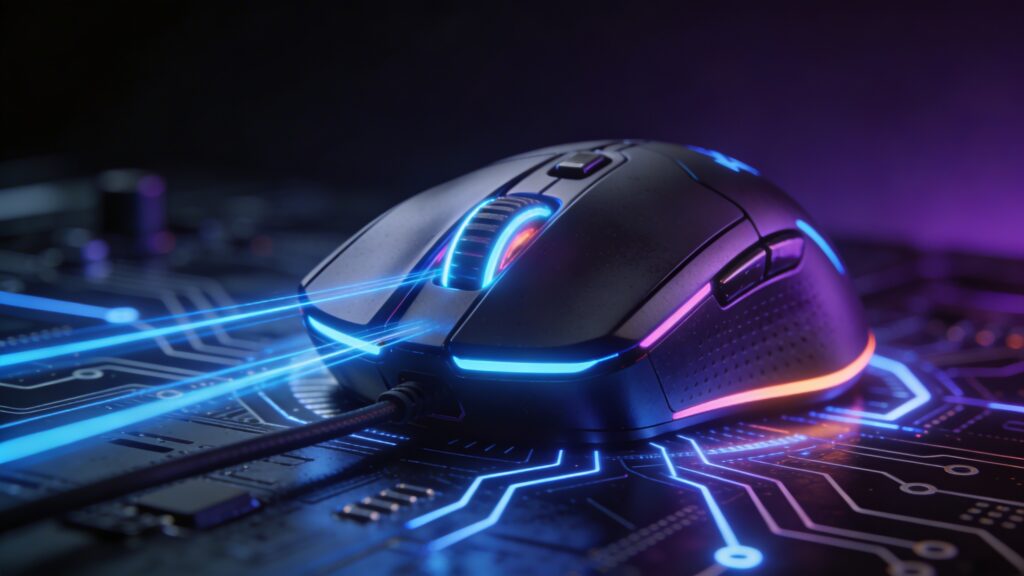
Impact of Computer Mouse on Technology
Impact of computer mouse on technology defines how the device transforms user interaction and productivity.
Mouse Enables User-Friendly Interfaces
Mouse enables user-friendly interfaces. Point-and-click interaction simplifies computing.
Visual navigation improves accessibility. Users interact without technical complexity.
Cursor Control Improves Productivity
Cursor control improves productivity. Accurate movement speeds up task execution.
Efficient control reduces errors. Users complete work faster.
Timeline Table of Computer Mouse Evolution
Computer mouse evolution timeline shows how technology progresses from simple prototypes to advanced high-performance devices.
| Era | Technology | Key Development |
|---|---|---|
| 1960s | Prototype Mouse | First concept created |
| 1970s | Mechanical Mouse | Ball-based tracking introduced |
| 1980s | Commercial Mouse | Used in personal computers |
| 1990s | Optical Mouse | Light-based tracking |
| 2000s | Wireless Mouse | RF and Bluetooth introduced |
| 2010s+ | Gaming Mouse | High DPI and customization |
Computer Mouse – Advantages Over Time
Computer mouse advantages over time show how innovation improves performance, usability, and efficiency.
Accuracy Improves with Technology Evolution
Accuracy improves with technology evolution. Advanced sensors replace mechanical systems.
Improved tracking enhances precision. Users achieve better control.
Speed and Efficiency Increase with Innovation
Speed and efficiency increase with innovation. Faster signal processing improves responsiveness.
Optimized performance reduces delay. Users complete tasks quickly.
Computer Mouse – Challenges and Limitations in History
Computer mouse challenges and limitations in history highlight how early designs struggle with performance and durability.
Early Designs Face Mechanical Issues
Early designs face mechanical issues. Ball-based systems collect dust and wear over time.
Mechanical failure reduces accuracy. Maintenance becomes necessary.
Modern Devices Address Performance Limitations
Modern devices address performance limitations. Optical and wireless technologies improve reliability.
Advanced systems enhance durability. Performance remains consistent.
FAQs About Computer Mouse History
When was the computer mouse invented
The computer mouse was invented in the 1960s. Early prototypes establish the foundation of cursor control.Want to understand performance? Check our mouse DPI guide.
Who invented the computer mouse
The computer mouse was invented by Douglas Engelbart. His research introduces a new way to interact with computers.
What was the first mouse made of
The first mouse was made of wood with metal wheels. Early design focuses on movement tracking.
How did early mouse technology work
Early mouse technology works using a rolling ball mechanism. Internal rollers convert movement into signals.
Mechanical tracking creates cursor motion. Systems interpret direction and speed.
Why is the mouse important in computing history
The mouse is important in computing history because it enables graphical interaction. It replaces complex command input.
User-friendly design improves accessibility. Computers become easier to use.
Computer Mouse History Shows Continuous Innovation and Relevance
Computer mouse history shows continuous innovation and relevance. Technology evolves from mechanical systems to advanced digital sensors, improving precision, speed, and usability. The mouse remains a critical input device in modern computing, supporting productivity, gaming, and professional work.
see about computer mouse